All Categories
Featured
Table of Contents
- – The Technical Structure of Modern Innovation C...
- – Building Neural Architectures for Product Design
- – Resource Management and Specialized Skill
- – Secure Data Silos and IP Defense
- – The Role of Simulation-First Engineering
- – Hardware Velocity in the R&D Lab
- – Communication Throughout Dispersed Research Teams
- – Adjusting to Rapid Regulatory Modifications
- – Future Trends in 2026 and Beyond


The Technical Structure of Modern Innovation Centers
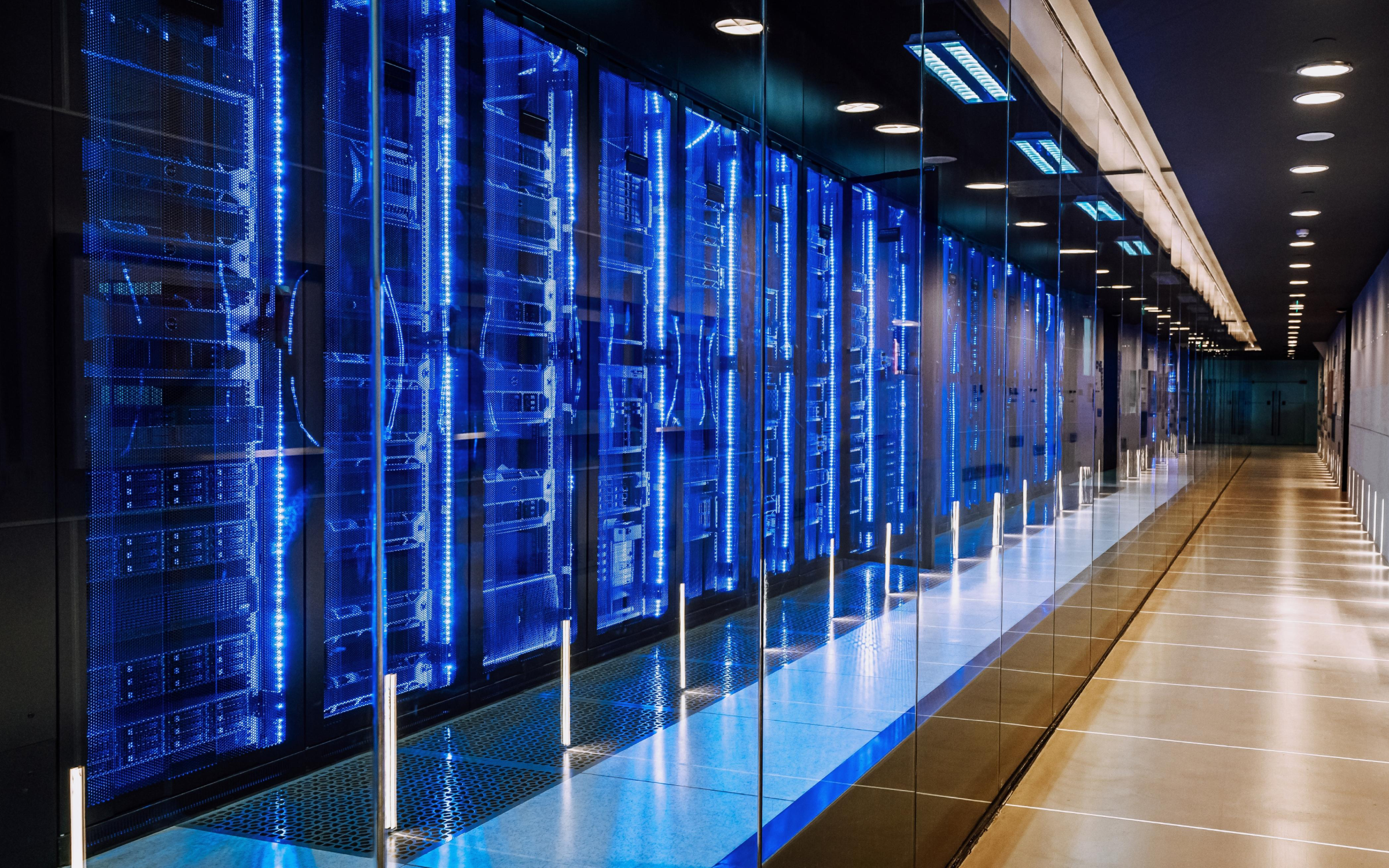
Product advancement in 2026 counts on a data-first technique that focuses on simulation over physical prototyping. The majority of massive operations have actually moved far from standard lab structures towards high-density calculate centers. These sites function as the primary engine for testing new products, software application configurations, and mechanical styles. The shift is driven by the reducing expense of specialized silicon and the increasing precision of physics-based models that permit millions of versions in a virtual environment before a single physical unit is built.A standard R&D center now houses devoted server clusters running personal big language models. These designs are trained exclusively on proprietary data to ensure intellectual residential or commercial property remains safe and secure. By keeping the processing local, companies prevent the latency and personal privacy risks associated with public cloud services. This regional processing capability permits engineers to query decades of internal test results and style documents in seconds, effectively turning the business's history into an active part of the design process.Reliability in these systems is kept through redundant power supplies and advanced liquid cooling systems. In 2026, the thermal management of a research website is as crucial as the engineering skill itself. Without steady temperatures, the high-performance chips required for intricate simulations would throttle, decreasing the development cycle by weeks or months. Organizations prioritizing Innovation Excellence have discovered that infrastructure stability is the best predictor of meeting quarterly advancement targets.
Building Neural Architectures for Product Design
The approach agentic workflows has redefined how technical teams approach analytical. In previous years, researchers manually input variables into simulation software. In 2026, self-governing agents handle the optimization process. These representatives are configured with particular constraints-- such as weight, expense, and sturdiness-- and are left to go through thousands of style variations. The human engineer functions as a manager, examining the leading three percent of results instead of performing the dirty work of variable adjustment.Neural networks utilized in this capability are significantly modular. Instead of one enormous model for whatever, companies utilize a series of smaller sized, highly specialized designs. One may focus on fluid characteristics while another evaluates manufacturing expediency based on current supply chain accessibility. This modularity makes it easier to upgrade specific parts of the system without retraining the whole structure. It likewise enables much better transparency when a design fails, as the team can trace the mistake back to a particular model's output.Data quality remains the most significant hurdle. Synthetic information has ended up being a staple in 2026, filling the gaps where physical test information is sporadic. By utilizing generative models to create reasonable edge cases, engineers can stress-test designs versus scenarios that are uncommon in the genuine world but disastrous if they happen. This practice has actually resulted in a considerable reduction in product recalls and field failures.
Resource Management and Specialized Skill
The role of the scientist has actually shifted towards that of a systems designer. Proficiency in 2026 needs more than deep knowledge of a specific field like chemistry or mechanical engineering. It also needs the capability to direct AI agents and analyze complex data visualizations. Hiring is no longer about finding the person with the most experience in a lab, however discovering the individual who can finest manage the digital tools that run the lab.Internal training programs have actually become the primary method for talent acquisition. Since the specific tech stack of a 2026 innovation center is frequently proprietary, companies can not rely on universities to provide fully trained graduates. Instead, they hire for core scientific principles and after that offer 6 months of intensive training on their specific AI-driven tools. This investment ensures that the workforce comprehends the specific nuances of the company's modeling software application and information governance policies.Investment in Innovation Excellence continues to grow as firms understand that human capital is only as efficient as the tools it manages. High-performance teams are defined by their ability to pivot quickly when a simulation reveals a defect. The speed of this pivot is figured out by how well the information is indexed and how quickly the research team can communicate with the software development side of business.
Secure Data Silos and IP Defense
Intellectual home protection is the most pointed out concern for 2026 R&D heads. As designs end up being more capable, the threat of an information leak boosts. If a rival gains access to a proprietary model, they get more than just a set of blueprints. They acquire the whole logic utilized to produce those plans. To fight this, many companies utilize "air-gapped" R&D networks that have no physical connection to the outside internet.Data obfuscation techniques are likewise standard. When data moves between departments, it is typically encrypted or stripped of specific identifiers that could expose a task's supreme objective. Just at the highest levels of the innovation center is the full picture noticeable. This compartmentalization avoids a single security breach from jeopardizing the entire roadmap.The use of blockchain for audit routes has actually seen a revival in 2026. Every change to a design file and every prompt offered to a research study representative is recorded on a personal ledger. This creates an unalterable history of the item's advancement. If a patent disagreement arises, the business can provide a minute-by-minute record of the discovery process, proving the originality of their work.
The Role of Simulation-First Engineering
Simulation-first engineering is not simply a technique but a requirement in the 2026 market. Customers anticipate quicker upgrade cycles and greater levels of personalization. To satisfy these demands, business must be able to branch their styles quickly. For instance, an automobile producer may produce fifty different suspension tunes for a single model to suit different regional terrains. This would be impossible without automated simulation.Digital twins serve as the focal point of this method. A digital twin is a virtual representation of a physical things that is upgraded with real-world information in real-time. In 2026, these twins are utilized throughout the whole product lifecycle. Even after an item is sold, data from its sensing units is fed back into the R&D center to improve the next generation. This develops a constant loop of enhancement that was previously impossible.The accuracy of these twins has reached a point where they can predict wear and tear within a 5 percent margin of mistake over a ten-year span. This level of precision enables thinner margins in material usage, minimizing expenses and ecological effect without compromising security. Business that mastered these simulations early in 2026 now hold a significant lead in making performance.
Hardware Velocity in the R&D Lab
Standard CPUs are rarely used for the heavy lifting in contemporary development. Instead, Tensor Processing Units and Field Programmable Gate Arrays are the standard. These chips are developed to handle the particular kinds of math used in neural networks and physics engines. By using specialized hardware, teams can finish in hours what used to take days.The cost of this hardware is considerable, causing a pattern of "hardware sharing" within large corporations. A division in the local market may use a compute cluster in the morning, while a division in a various time zone takes over the capability in the night. This makes sure that the pricey silicon is never ever sitting idle. Effective scheduling of calculate resources is now a core proficiency for R&D managers.Maintenance of these systems needs a new type of professional. These individuals should comprehend both the hardware layer and the software application stack. If a simulation is running gradually, the issue might be a malfunctioning cooling pump or a sub-optimal code bit. The ability to detect concerns throughout these different layers is an uncommon and valuable ability set in 2026.
Communication Throughout Dispersed Research Teams

While the compute may be centralized, the skill is frequently dispersed. In 2026, virtual truth is used for more than just conferences. It is utilized for collective design reviews. Engineers from across the globe can "stand" inside a 3D model of a turbine or a chemical plant and go over modifications as if they were in the same space. This spatial awareness causes faster agreement and fewer misunderstandings compared to 2D video calls.Data visualization tools have likewise evolved. Rather of easy charts, scientists utilize immersive environments to explore multidimensional information. They can walk through a graph of a high-dimensional design space, trying to find clusters of successful variables. This instinctive technique to data exploration frequently leads to "aha" moments that would be missed in a spreadsheet.The integration of these tools into the daily workflow has reduced the requirement for physical travel, though the importance of the periodic in-person session stays. The majority of effective 2026 development methods involve a mix of high-frequency digital partnership and quarterly physical events at the main research study site to align on long-term objectives.
Adjusting to Rapid Regulatory Modifications
In 2026, guidelines regarding AI use in R&D remain in a constant state of flux. Various areas have various requirements for transparency and data usage. To handle this, innovation centers have integrated "compliance representatives" into their workflows. These are specialized software application tools that keep an eye on the R&D procedure in real-time, flagging any potential infractions of local or global law.This proactive method prevents the company from investing millions on a job that can not be legally given market. The compliance representatives are updated daily with the current legal requirements from every jurisdiction the business operates in. This is particularly crucial for markets like pharmaceuticals and aerospace, where safety policies are strict and the cost of non-compliance is high.Ethics committees also play a bigger role in 2026. These groups examine the goals of the R&D center to ensure they line up with the business's mentioned values. As AI makes it easier to create effective and possibly hazardous innovations, the human element of oversight is more vital than ever. The goal is to make sure that while the tools are autonomous, the direction stays strongly in human hands.
Future Trends in 2026 and Beyond
Looking towards completion of 2026, the focus is shifting toward "zero-touch" R&D. This is an idea where the entire process from initial hypothesis to last design is managed by a chain of AI representatives, with human interaction just at the extremely beginning and really end. While this is not yet a truth for most, the parts are being taken into place.The next significant difficulty will be the integration of quantum computing into the basic R&D stack. While still in the early stages, quantum-classical hybrid systems are beginning to show pledge for particular tasks like molecular modeling. Companies that are already comfy with AI-driven R&D will be the very best positioned to adopt quantum tools when they end up being more widely available.The centers that are successful in 2026 are those that see innovation not as a replacement for human imagination but as a method to enhance it. By getting rid of the recurring tasks of information entry and standard simulation, these companies allow their brightest minds to concentrate on the huge concepts that will specify the next decade of market. The roadmap for 2026 is clear: invest in information, prioritize security, and construct a culture that can adapt to the speed of digital experimentation.

Table of Contents
- – The Technical Structure of Modern Innovation C...
- – Building Neural Architectures for Product Design
- – Resource Management and Specialized Skill
- – Secure Data Silos and IP Defense
- – The Role of Simulation-First Engineering
- – Hardware Velocity in the R&D Lab
- – Communication Throughout Dispersed Research Teams
- – Adjusting to Rapid Regulatory Modifications
- – Future Trends in 2026 and Beyond
Latest Posts
Building the Foundation for Tomorrow's Digital Innovation Centers
From Model to Production: Improving the Development Funnel
Modernizing Business Cooling Systems for Sustainable R&D The Significance
Latest Posts
Building the Foundation for Tomorrow's Digital Innovation Centers
From Model to Production: Improving the Development Funnel
Modernizing Business Cooling Systems for Sustainable R&D The Significance